
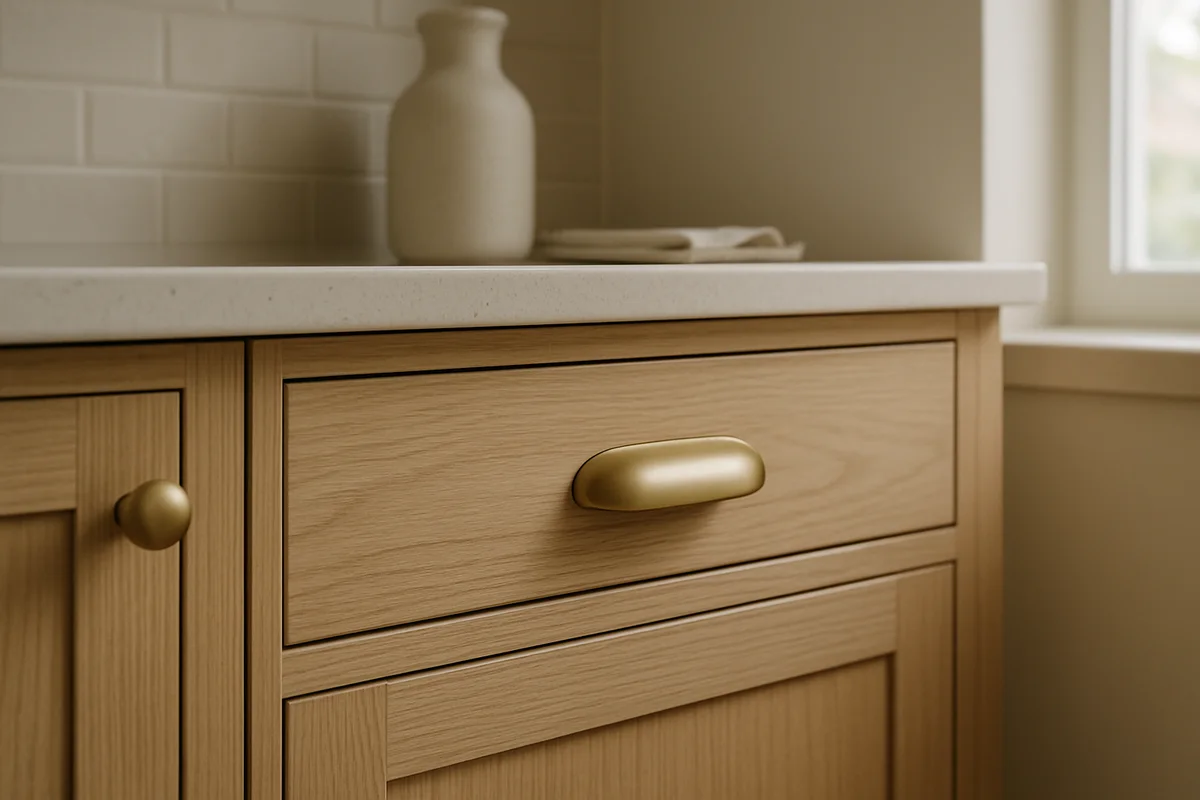
Cabinet hardware is one of the last things people notice in a product photo and one of the first things they touch in the room. A good-looking pull that catches a pocket or feels awkward in the hand is not a good fit for that cabinet.
Try the shape on the actual door
Borrow a sample if the supplier allows it. Hold it on a drawer front and open the drawer the way you normally would. A narrow pull may suit a small door, while a wider grip can be easier on hands. Knobs and pulls can be mixed, but decide where each type belongs before holes are drilled.
Measure the center-to-center distance between mounting holes. Replacing hardware later is simple only when the new piece covers the old marks and uses the same spacing. For new cabinetry, ask the cabinet installer to confirm the placement template and who is responsible for drilling. This avoids a last-minute guess on door fronts.
Choose the finish with care in mind
Brushed and matte finishes can soften reflections; polished finishes show a sharper shine. Each finish handles fingerprints and cleaning differently, and wear varies by maker. Put the sample next to the faucet, hinges, and light fixtures, but do not assume every metal must match exactly. A deliberate contrast can work when the undertones and sheen feel related.
Ask how to clean the chosen finish and whether the maker excludes certain cleaners from its warranty. Then check the quantity, including a spare or two if the model is likely to be discontinued. A small piece is still worth choosing with a hand on it.