
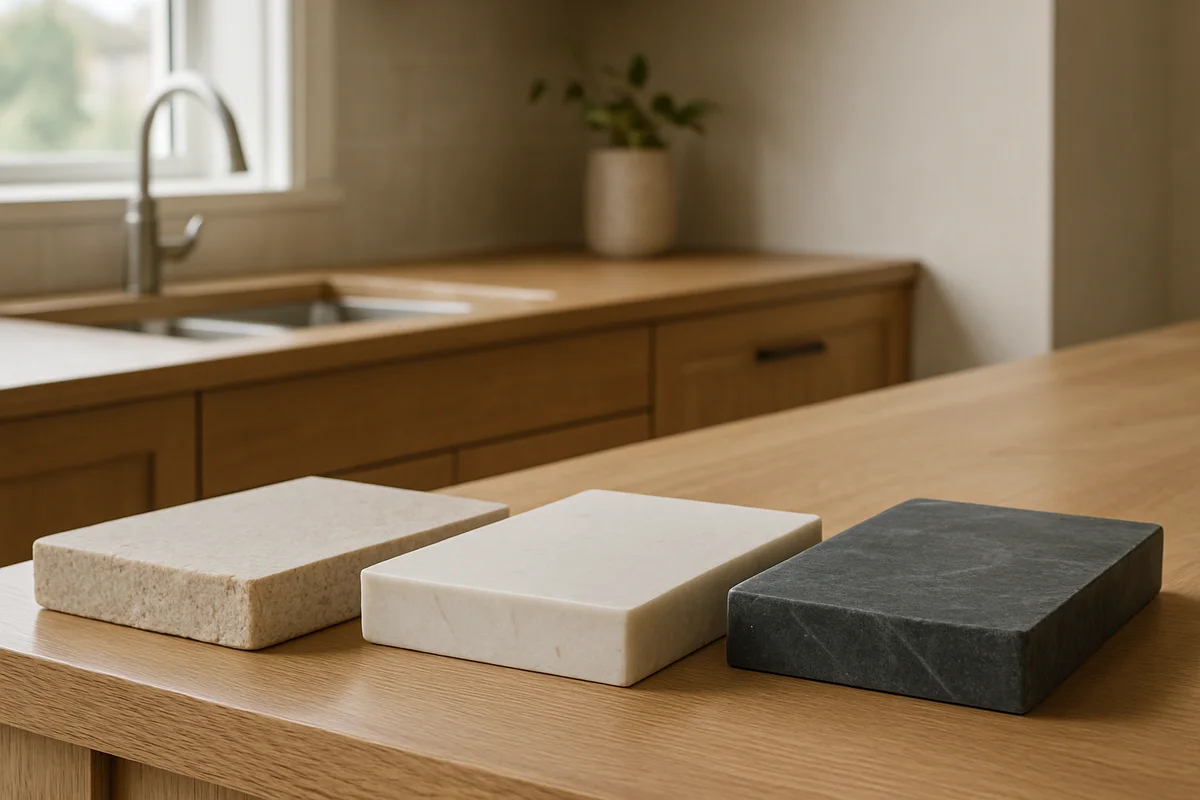
The best countertop is the one you can live with on a busy Tuesday, not just the one that looks good in a showroom. Before you choose a color, think about what lands on the counter every day: hot pans, school bags, coffee, or a pile of mail.
Start with the work the counter will do
If you cook often, ask how a sample handles heat, stains, and the cleaners you already use. No countertop is carefree. A trivet is a good habit with any material, and the maker's care instructions matter more than a salesperson's promise.
Quartz is made from crushed stone and resin. It comes in many consistent colors and usually needs less routine upkeep than many natural stones. It can still be damaged by high heat, so don't set a hot pan straight on it.
Natural stone, including granite and marble, varies from slab to slab. That's part of its appeal. Some types can stain or etch and may need sealing. If you love a particular slab, see the whole piece before the shop cuts it.
Laminate can keep the cost down and offers more looks than it used to. Ask how the edge and seams will be finished, and be careful with heat and standing water near joins.
Get the whole price
The price of a sample is not the price of your finished counter. Ask for an installed quote that covers the edge, sink cutout, backsplash, removal of the old top, and any unusual corners. If you are comparing two materials, compare those full quotes, not just the price per square foot.
Bring a cabinet door, flooring sample, and a photo of the room when you look at counters. Check samples in your home's morning and evening light. Then ask your contractor which choices fit the cabinets, sink, and installation sequence. A good pick should work for the room and for the people using it.