
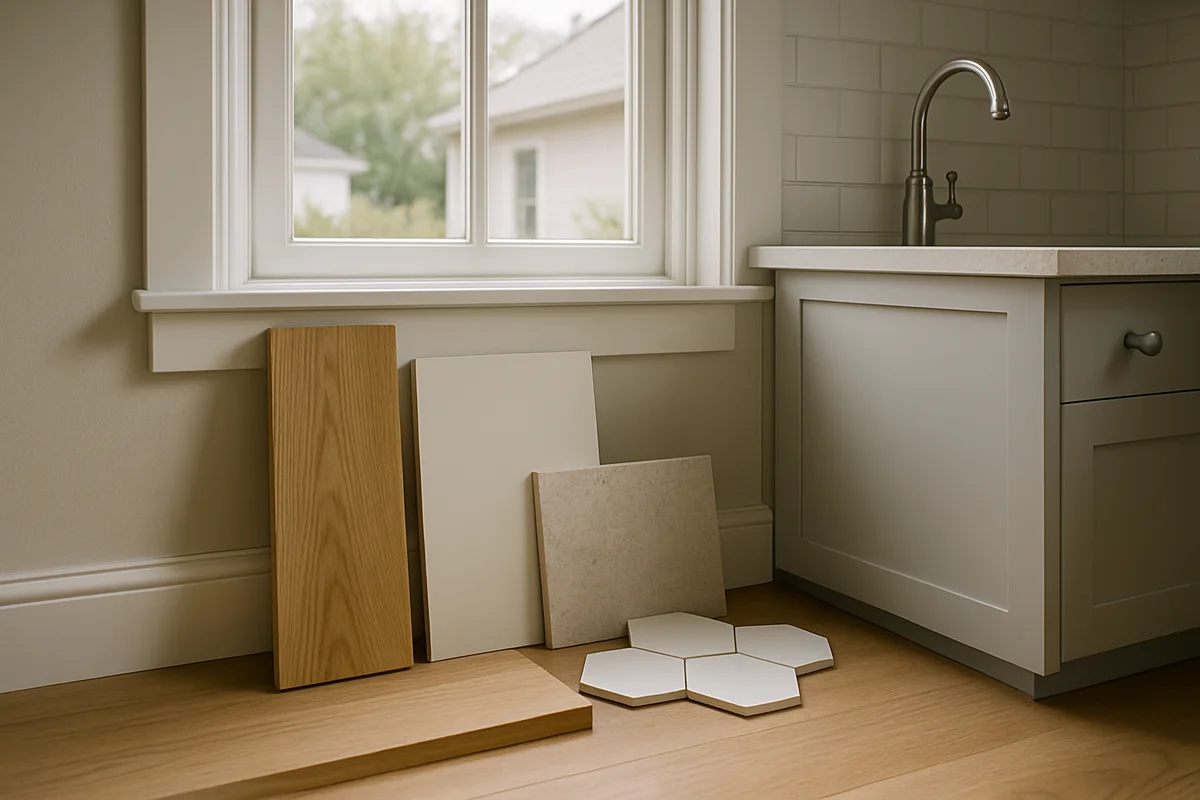
A stack of beautiful samples can still produce a room that feels wrong if each choice was made in isolation. Bring the major finishes together before approving orders: cabinet door, counter, floor, tile, grout, paint, and metal samples.
Make the comparison fair
Look at samples in the room, not only beneath showroom lighting. Check them in daylight and with the planned evening fixtures switched on. If a large sample is available, use it; a small chip hides movement and pattern. For flooring or tile, put several pieces together so you can judge the repetition and grout line.
Lay the samples on a neutral surface and move them beside one another. Notice undertones: a white that looks clean by itself may turn yellow next to a cooler white. You do not need every finish to match, but the combination should feel intentional. Photographing the set can help you remember it, though a phone screen changes color and should not replace the real samples.
Include practical information
Write each product name, color, finish, size, and supplier on a label. Note whether a sample is the exact production item or only a close substitute. Ask about variation between batches, especially with natural materials and handmade tile. Confirm return terms and current lead times before buying multiple boxes.
Set samples next to the permanent surfaces they will meet: tile against the cabinet, counter against the wall color, and flooring under the door casing. Ask your contractor to flag any dimension, edge, or transition concern before the order is placed.
Take your time, but set a decision date that respects ordering needs. A practical sample review is a short, useful meeting with the right pieces in hand—not a hunt for a perfect swatch in every possible light.