
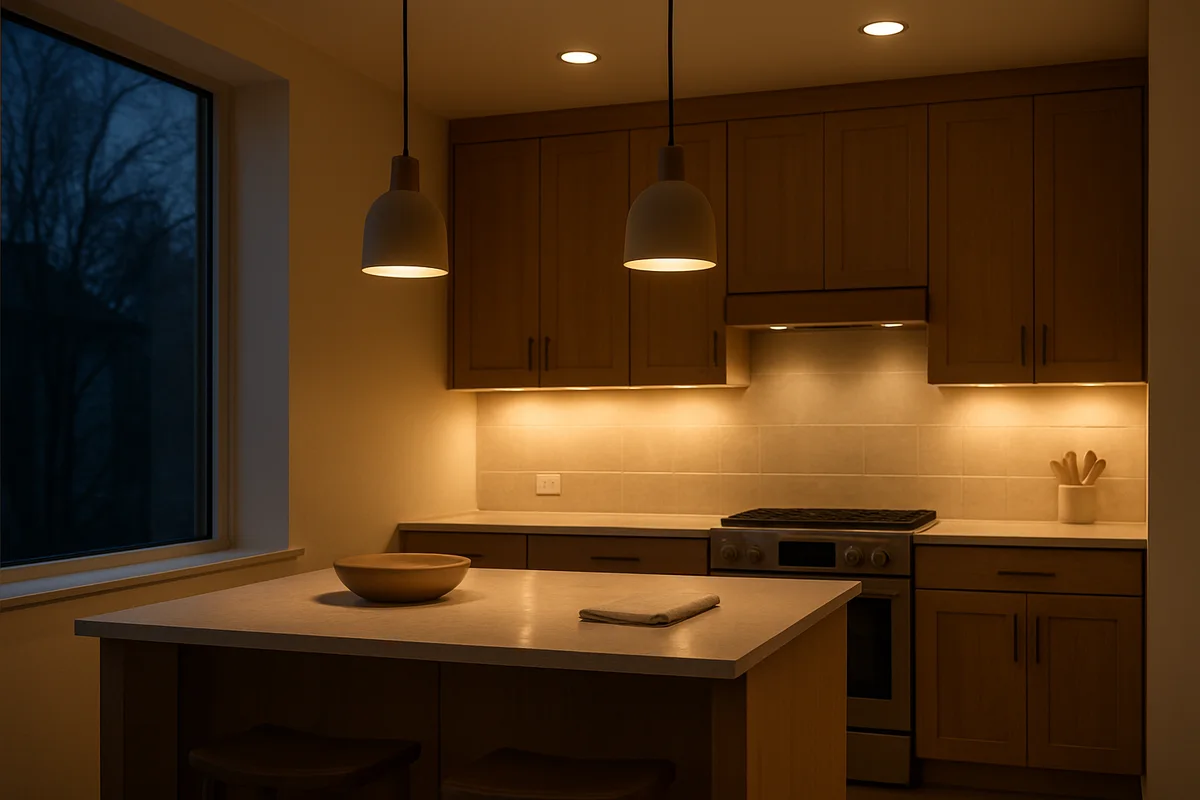
A kitchen may be a place to chop vegetables, read a recipe, talk over coffee, and find a glass of water after bedtime. One ceiling fixture cannot serve every task equally well. Planning separate layers makes the room more flexible.
Start with the work areas
Under-cabinet lights can brighten a counter that sits in the shadow of an upper cabinet. Ceiling fixtures or recessed lights provide general illumination, while pendants can define an island or table. The best arrangement depends on ceiling height, cabinet layout, and where people stand. Ask the electrician to mark proposed fixture locations before wiring so you can check them against the plan.
Coordinate the details early
Choose the fixture size and mounting location before the ceiling is closed. Confirm whether a pendant needs a special box, whether under-cabinet lighting needs a driver, and where switches will sit. Dimmers can help move from bright task lighting to a calmer evening setting, but make sure the dimmer and bulbs are compatible. Bulb color temperature and color rendering affect how food, paint, and counters look; compare the actual lamps if you can.
There is a practical balance between a decorative fixture and one that is easy to clean. Open shades may be simpler to dust; enclosed glass can collect bugs and show fingerprints. A bold pendant can be a focal point, but check its scale from across the room and make sure it does not block sightlines.
Ask your contractor to include fixture allowance, installation, switches, and any added wiring separately in the written scope. A fixture price alone does not tell you the full cost of getting useful light to the right place.