
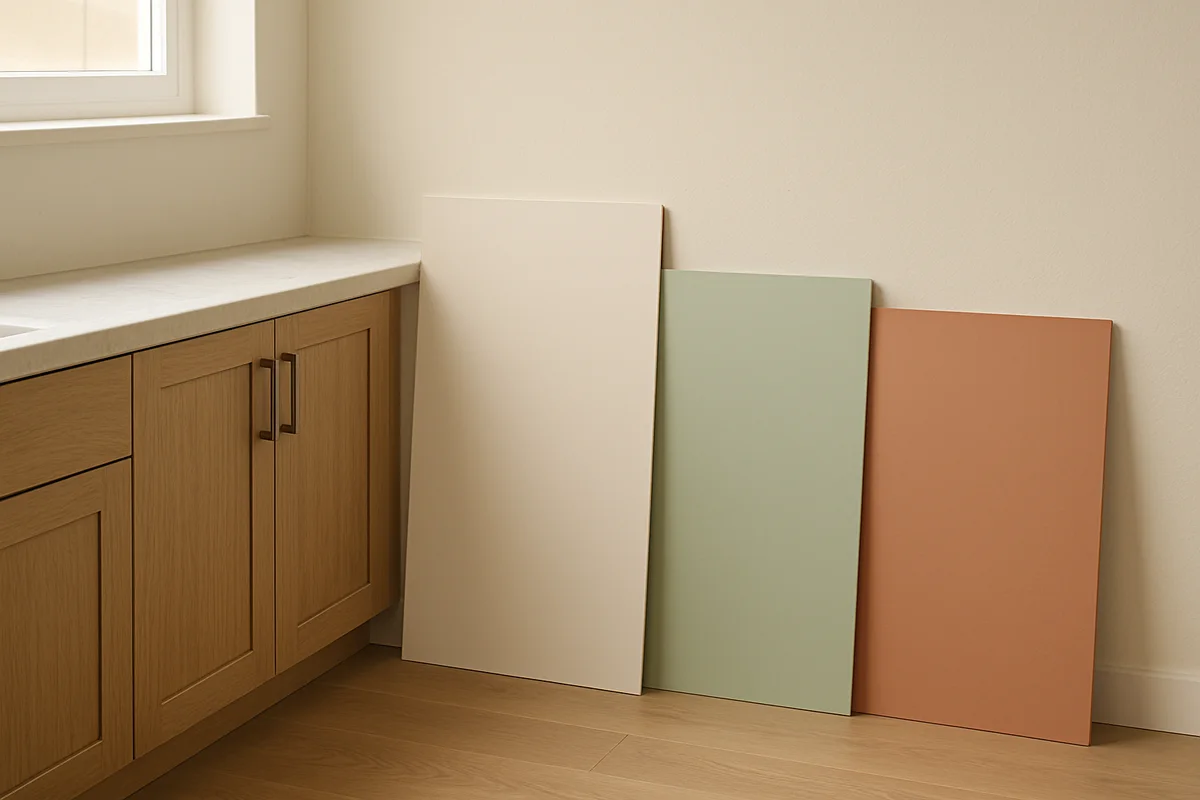
Paint is easy to change compared with tile or cabinetry, so it often makes sense to wait until the permanent surfaces are chosen. That does not mean paint is an afterthought. A wall color can make a warm wood floor look pink, or a cool gray counter feel even cooler.
Read the room before the chip
Put a painted sample board beside the counter, cabinet door, and flooring you plan to keep. Move it around the room at different times of day. North-facing light, warm bulbs, and nearby trees can all change how a color reads. A tiny paper chip is too small to show the effect of a full wall.
Compare the undertones rather than hunting for an exact match. A soft green may sit comfortably beside warm oak without copying its color. If a room connects to a hallway or dining area, look at the transition from both sides and check the paint in the adjoining space too.
Plan the finish as well as the color
The sheen affects glare, cleanability, and how visible wall imperfections become. Ask the painter which finish suits the surface and how the walls will be prepared. Repairs, primer, and extra coats can affect the total, particularly when moving from a deep color to a pale one.
Make a short list of the final colors and label each sample with its name and room. Confirm whether ceilings, trim, and doors are included in the painting scope. Then leave the sample boards up long enough to see them under your evening lights. The right color should still feel comfortable when the room is being used, not only when it is freshly painted.